Target Group: MPSP Ph.D. candidates
Learning Objectives: International students can have a higher motivation to learn quantum optics.
Overview
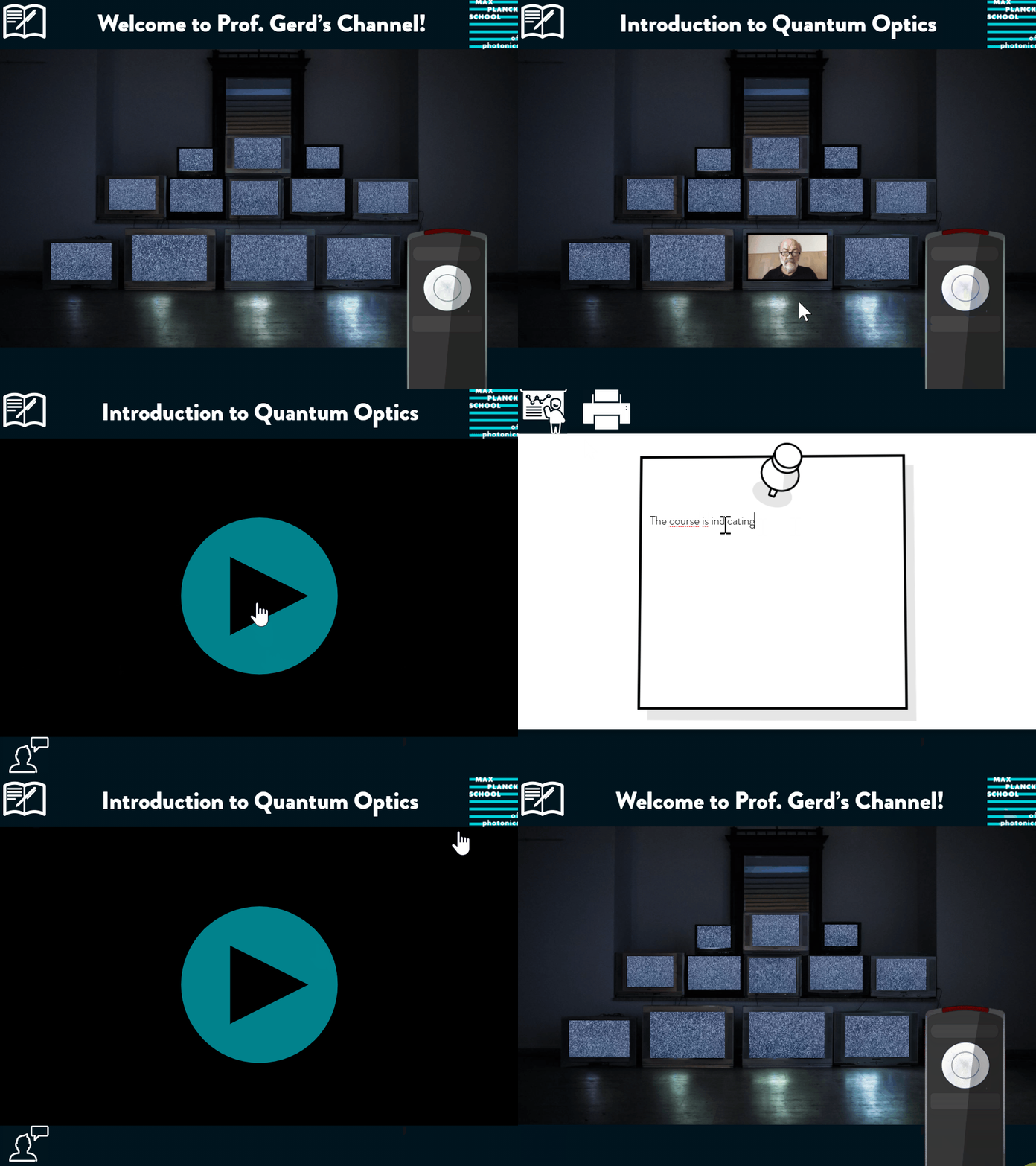
This project is for the students, who have a strong interest in quantum optics at Max Planck School of Photonics. The game brings students into a TV-like environment to trigger students’ learning behaviors by clicking on the remote control. Students do not only watch through small video clips but also write down their notes. In this way, students can retent what they have been through during the video clips and not just “interact” with the game.
Please watch the following GIF to have the first idea.
Design Process
The scientific coordinator and the professor asked me about my suggestions regarding the existing videos about quantum optics and how to make them more entertaining to learn. My personal suggestion would be the use of Richard E. Mayer’s principles to cater to students’ learning behaviors and create such an entertaining environment to embed different learning materials such as the videos, that we discussed or any supporting material. We made a consensus during this process and decided on future procedures. In the end, we agreed with the format of video clips and the TV channel we are going to construct.
Development Process
I modified the video clips based on Richard E. Mayer’s signaling, segmenting, and imaging principles to cater to students’ learning behaviors. Afterward, I designed a TV channel environment to embed different video clips. Articulate Storyline, Panopto and Adobe Premiere Pro are the tools to bring this learning experience to life.
Behavioral/ cognitive understanding
According to Richard E. Mayer’s studies, we can say, a learning material should not only satisfy students’ behavioral understanding (interactivities) but also cognitive understanding (retention/ transfer tests). If we just focus on the fancy interactivities and aesthetics, we definitely can satisfy students’ interactions with the game and the videos but no one can guarantee if they have absorbed the knowledge. Besides the design process, I proposed the noting functionality to ask students to summarize what they have learned from the videos to satisfy students’ cognitive understanding.
Results and Giveaways
The final learning game has been given away and demonstrated during the school evaluation in 2021. The school evaluation invited professors from ETH Zürich and different academic institutes across Germany to evaluate the current mechanism of our school.
 Lin’s Digital Learning World